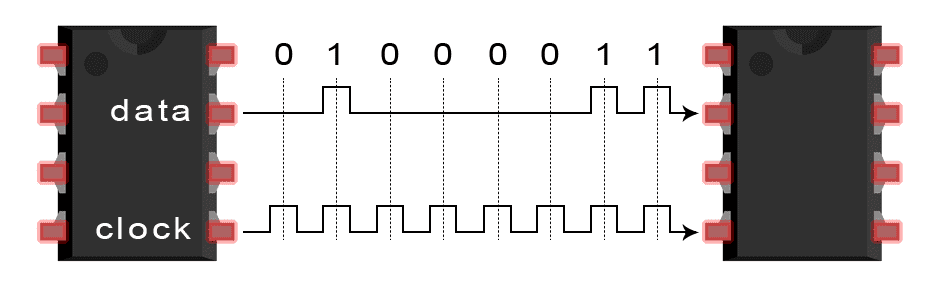
1. Introduction to SPI
SPI (Serial Peripheral Interface) is a synchronous serial communication protocol used to connect microcontrollers with peripherals like sensors, displays, and memory chips.
It is widely taught in Coimbatore and Pollachi as a core embedded systems concept.
2. How SPI Works
SPI uses four main signals: MOSI (Master Out Slave In), MISO (Master In Slave Out), SCLK (Serial Clock), and SS/CS (Slave Select/Chip Select).
Training centers in Udumalaipettai and Dindigul provide hands-on experiments on SPI communication between controllers and sensors.
3. Advantages of SPI
SPI is faster than protocols like I2C because it uses a full-duplex mode and dedicated lines.
Institutes in Kinathukadavu and Coimbatore highlight SPI’s role in real-time embedded applications.
4. Limitations of SPI
Since SPI requires more wires (one CS line per device), it is not as scalable as I2C.
Students in Pollachi and Udumalaipettai learn trade-offs of using SPI in complex systems.
5. Applications of SPI
SPI is widely used in embedded systems for memory chips, SD cards, LCD/OLED displays, and sensor modules.
Training institutes in Dindigul and Coimbatore include SPI projects in their embedded systems curriculum.
Career Opportunities
Knowledge of SPI protocol is essential for careers in embedded systems design, IoT, and hardware development across Coimbatore, Pollachi, Udumalaipettai, and Dindigul.
Institutes collaborate with electronics companies to provide real-time projects and placements.
Conclusion
SPI protocol is a fundamental building block for engineers entering embedded systems and IoT.
By learning SPI protocol in Coimbatore (Kinathukadavu), Pollachi, Udumalaipettai, and Dindigul, professionals can strengthen their career in electronics and embedded systems.